Monday, July 5, 2021

THE SEAT OF POWER


THE SEAT OF POWER

Ramses II seated on a cubical throne.


        A chair, in the simplest definition, is a piece of furniture with a raised platform used to sit on. Later added in the description is the backrest, the armrests and the three or four legs. Based on these accounts, the earliest historical proof of the existence of such a furniture dates back to ancient Egypt and Greece (c. 2500 B.C.–2000 B.C.), and to the earliest dynasties in China (c. 2100 B.C.–1100 B.C.). Its invention predates its own name. The word “chair” as derived from the Old French chaiere, which means “seat” or “throne,” was conceived during the 12th century.


Game of Thrones

An ancient Chinese stone stool.

        Before the “true” chair was introduced to mankind, people used to sit on the ground or to whatever piece of solid matter – a rock or fallen tree trunk – they could rest their buttocks, which at the beginning didn’t have a name but later was simply known as a “stool.”

        The word “stool” came from the Old English stol, meaning a “seat for one person, which in turn was derived from the Proto-German stola, meaning “seat.” Interestingly, the Old English cynestol was originally used to mean “royal seat” or “throne.”

        Consequently man invented all sorts of improvements to make him more comfortable while sitting. A man has a back so his seat should also have a backrest; arms so it should have armrests; limbs so it should have legs, and so on.

        By the 12th century, when the word “chair” was adopted into the English language through the Old French chaiere, meaning “throne,” the word stool was relegated to mean “small seat without arms or backs.” By the 1530s, it declined further into “bowel movement.”

        The advent of civilization which is also the advent of governance or the power to rule made the “chair” a symbol of authority and privilege. The mere resting place of man’s buttocks – the salumpuwit in the Tagalog vernacular – became the seat of his power. It maybe urban legend, but there’s a saying, “From where the Viking farts, there wields his power.”

Cleopatra sitting
on her elaborated throne.


        The Old French Chaiere evolved into the Modern French chaire, and now not only means “throne” but also “pulpit” as it is equated with the Latin cathedra, meaning “easy chair” (principally used by women), but was derived from ecclesia cathedralis, which translated to “church of a bishop’s seat.”

        In ancient Egypt, chairs appear to have been of eloquent richness and splendor. Fashioned of ebony and ivory, or of carved and gilded wood, they were covered with expensive materials, magnificent patterns and supported upon representations of the legs of great beasts or the figures of captives. Generally speaking, the higher ranked an individual was, the taller and more splendid was the chair he sat on and the greater the honor given to him. In most household, only the head of the family sits on a chair.


Emperor Taizu sitting on his cushioned and gilded throne.

A more elaborate throne during the later Chinese dynasty era.

        Indeed, as the simple chair was reinvented, it became a “throne” onto which emperors, kings, pharaohs, chieftains, popes, governors and all people in authority wield their power. It also became the symbol of nobility and the privilege of the royalties. Later, however, as social and communal revolutions change the face of the world, so did the utility of the chair becomes public concession.

The Throne of Maximian.

        By the 16th century, the chair became as common as the books people read while seated on its comfort, and by the 18th century, more or less all of earth’s inhabitants have seen and used a chair or two. It became a furniture for convenience.

        Almost all nationalities have a similar history as to how their own version of the chair came to be and how it evolved. Perhaps this can be explained by a mixture of sociology and anatomy. Humans of whatever race or nationality are basically gregarious in nature. They love to mingle and talk, and they always enjoy sitting together while they do this. On the other hand, human anatomy is well suited for sitting. Have you ever wonder why the largest muscle – Gluteus maximus – in the human body is located on his buttocks?


Hot Seat

Amarna Period tablet showing Akhenaten and Nefertiti sitting on a leisure stool.

        The chair is a simple invention known since antiquity, although for many centuries it was an emblem of state and dignity rather than an article of ordinary use. In fact, it was not until the 16th century that it became common anywhere. Until then the chest, the stool and the bench were the ordinary seats of everyday life, and “the number of chairs which have survived from an earlier date is exceedingly limited; most examples are of ecclesiastical or seigniorial origin.”

From the Parthenon frieze: Poseidon, Apollo and Artemis sitting
on a square stool with cylindrical legs.


The Seat of Dagobert.

Although it is not known exactly who invented the first chair and where in the world it was first made. Looking back to ancient times, we can see remnants and relics all over the world: The leisure stools of Akhenaten (c. 1361 B.C.-1334 B.C.) and Nefertiti (c. 1370 B.C.-1330 B.C.) depicted in an Amarna Period tablet (14th century B.C.); the statues of Ramses II (c. 1303 B.C.-1213 B.C.) near the Luxor Temple in Egypt depicting the pharaoh sitting on a cubelike throne without armrest (13th century B.C.); the Parthenon Frieze sculpted under the supervision of Phidias (c. 480 B.C.-430 B.C.), where Poseidon, Apollo and Artemis were shown sitting on square seats with rounded legs (5th century B.C.); the Throne of Maximian (499-556) in the Cathedral of Ravenna made of carved wood and ivory portraying figures of Catholic saints and scenes (A.D. 550); the Seat of Dagobert in Louve, France, made by Eligius of Aquitaine (588-660) of cast bronze and partially gilt, and supported by four legs chiseled in the form of leopard’s head on each corner of the seat and terminating as the animal’s foot (A.D. 630); the court portrait of Taizu (927-976), founder and first emperor of the Song Dynasty, sitting on a wide cushion throne with the added footrest (A.D. 960).


The Luklukan

The seated Bul-Ul,
Ifugao guardian spirits of rice crops.

        Some historians say that the first chair in the Philippines was brought by Ferdinand Magellan in 1521 and he gave it to Rajah Humabon of Cebu as a token of friendship. This is more of a historical distortion. While it is true that most of the early natives of the archipelago, like their Asian neighbors, sit on the floor when they eat during those times, the maharlikas or royalties of the time, the datus, lakans and rajahs, also like their Asian neighbors, have a “seat of authority,” the ancient ancestors of the Filipino royalties have the luklukan from which they administer their reign upon their subjects. This is hundreds of years before Magellan was even born.

        We should also remember that the “true” chairs historically appeared much earlier in China, Egypt, Middle East and Asia Minor before the idea was brought to Europe, and particularly in Spain. Chinese and Middle Eastern influences in early Filipino furnitures were already existing before the Spaniards came to our shore.

        Looking at the word silya, we accept this as a Spanish heritage, from silla, the meaning of which can both represent “seat” or “chair.” The word, however, like bangko (also of Spanish origin, from banco, meaning “bench”), pertains in the local parlance more specifically to a stool or a seat without backrest and armrests and not to a “true” chair. The word upuan (from the rootword upo and the prefix an), on the other hand, is a synonymous Tagalog word already existing before the arrival of Magellan in the Philippines. The word, however, is a general term, synonymous with the English “seat” without any specific description as to backrest and armrests. Hench, a stool, a chair or a bench or sofa can be called upuan in Tagalog. Still another word is likmuan (from the rootword likmo, meaning “place of comfort or bliss”), which is more of a poetic assertion of a “blissful place” where one could rest comfortably. The best equivalent of the Filipino likmuan in English, with respect to a kind of seat, is probably the “loveseat.” Although likmuan is around three centuries older in etymology than the very recent English term, which probably appeared around the Victorian Era. Of course who can miss the very obvious salumpuwit – the “buttocks supporter” – which is of a fairly recent concoction.

Hara-Siri sitting on her throne
(fom Gregorio C. Coching's komiks novel of the same title
published in Tagalog Klasiks, May 6 - August 26, 1960).

        Going back to the word luklukan. When a datu is chosen to lead his tribe, he is said to be blessed by Kabunyian (Bathala or Laon in other dialects) or a diwata, through the intercession of the babaylan (priestess), and is seated in the luklukan, an elevated “chair” with backrest and armrests made of bamboo or hardwood gilt in gold and resting on top of two long sturdy poles. The luklukan is said to represent the kandungan or lap of a guiding diwata (or anito) in a sitting position with her hands and arms open above her thighs, hence the backrest and armrests (In old Tagalog, luklok and luklukan have an unmistakable affinity with kandong and kandungan). After the ceremony, the datu sits on the luklukan and it is raised and carried by his slaves around his balangay, banwa, ili or sakop to be praised by his people. Then the luklukan is finally rested on the porch of the datu’s balay until the time of his successor, who would choose to continue using it or burn it and ask that it be replaced.

        The word luklukan itself maybe older than the current etymology dating of 12th to 13th century. It came from the rootword luklok, which means “put in a blessed place” or “sit in a place of honor.” As such, the word iluklok translates to putting a person to a position of privilege or honor – “to consecrate” or “to enthrone.” This maybe akin to the Indo-Sanskrit duduk or dukduk, which means “throne” or “enthrone,” a word dating back to the Sri-Vijayan empire, which was the dominant power in south and southeast Asia around the 7th to the 11th century.

Even Chairs Evolved

An ancient Chinese high chair.

        Early chairs were made of carved wood, were covered with cloth or leather and much lower than today’s chairs, only less than a foot high. It was in China that the higher chair first appeared and, by the turn of the 13th century, a vast majority of Chinese houses had a modified stool or chair to seat upon.

        In Europe, owing in great measure to the Renaissance, the chair ceased to be a privilege of the ruling class, and became a standard item of furniture for anyone who could afford to buy it. Once the idea of privilege faded, the chair rapidly came into general use. Its design began to change every few years to reflect the fashions of the time.

        By the 1830s, American households usually have a chair provided for every family member to sit down to dinner. Factory-manufactured “fancy chairs” allowed families to purchase complete sets including the dining table. With the Industrial Revolution, chairs became much more available.

Examples of modern/fairly recent chair designs.

        New technology became the tool in the manufactured of the chairs of the 20th century. Chairs made of metals, plastics, laminated woods and polymers came into existence. Interior designers, architects and engineers continuously reinvent the aesthetics and ergonomics of the “buttocks supporter” taking into consideration not only the fashion, artistry and comfort of use, but also economy, durability and mechanical design.

                   o     O     o


Saturday, June 12, 2021

THE PHILIPPINE FLAG


THE PHILIPPINE FLAG

        As early as the 12th century, the natives of the archipelago that would become the Republic of the Philippines already had banners to showcase the tribes and hierarchy they belong. The archipelago was divided into balangays, and banwas, each having a chieftain called datu or lakan having his own symbolic banner to represent him. Each region is ruled by a sultan or rajah, also having his own banner which is unfurled wherever he goes.

        During the earliest rebellion against Spain such as the Magalat Revolt (1596-1597), Itneg Revolt (1625-1627), Dagohoy Revolt (1744-1829), the Silang Uprising (1762-1763), the Palaris Revolt (1762-1764), banners were unfurled, but these were localized and represent only specific areas or entities. 

The First Philippine Flags

        After establishing the Katipunan on July 7, 1892, Andres Bonifacio (1863-1897) asked his wife Gregoria de Jesus (1875-1943) to conceptualize a flag to represent the Philippine revolutionary society. It was of rectangular form, red all throughout, bearing three letter Ks in white and arranged horizontally, which stood for “Kataastaasang, Kagalanggalangang Katipunan ng mga Anak ng Bayan” (Supreme and Most Consecrated Society of the Children of the Nation).

First flag of the Katipunan
(July 7, 1892)

         Other variations of this flag, such as showing the three Ks in triangular formation or just a single K in the middle were also used by Katipuneros. There were also variations such as the flags of the Magdiwang and Magdalo faction of the Katipunan bearing a sun with the baybayin letter K in the middle, with the former having 16 rays and the latter eight rays.

Flags of the Magdiwang and Magdalo factions of the Katipunan
(1896)

        What can be considered as the first official flag representing the Filipino nation was unfurled on August 26, 1896, at the first cry of the revolution against Spain in Pugadlawin (in present day Balintawak, Quezon City). It was a similar red flag with smaller three Ks below a blazing sun with 16 rays in the middle, aptly called  “Bukang-Liwayway ng Himagsikan” (Dawn of the Revolution).

First National Flag called Bukang-Liwayway ng Himagsikan
(August 26, 1896)

        At the Naic Assembly on March 17, 1897, the Katipunan leadership adopted a red flag showing a sun with a face and eight rays representing the first eight provinces that started hostilities against Spain and were placed under martial law by the Spanish colonial authorities. This same sun symbolism minus the face will later become part of the Philippine National Flag.

Flag of used in the Naic Assembly
(March 17, 1897)

        Aside from these, there were other flags of historical significance like the one used by Mariano Llanera (1855-1942), which Bonifacio called “Bungo ni Llanera” (Llanera’s Skull); the “Watawat ng Matagumpay” (Flag of the Triumphants), which was first used by Pio del Pilar (1860-1931) on July 11, 1895; and the flag used by General Gregorio del Pilar (1875-1899) patterned after the flag of Cuba, which was also in an ongoing revolution against Spain.

Flags of Mariano Llanera, Pio de Pilar and Gregorio del Pilar
(1895-1897)

Flag of Independence

        The Philippine flag undergone several evolutions. On its third phase and during the proclamation of independence in Kawit, Cavite, on June 12, 1898, a tri-color flag – Bandera de Junta Patriotica – was officially unfurled by Ambrosio Rianzales Bautista (1830-1903). Except for the mythical face of the sun and the margins of the equilateral triangle with the edge of the flag, this bandera resembles our present-day flag. It was sewn in Hong Kong by Marcela Marino de Agoncillo (1859-1946) with the help of his daughter Lorenza and Delfina Herbosa de Natividad (a niece of Dr. Jose Rizal, 1879-1900). It was brought to the Philippines by General Emilio Aguinaldo (1869-1964) and first displayed in battle on May 28, 1898. This flag underwent several changes in specification and color, but the overall design remained the same.

The Flag of Philippine Independence
(First unfurled, May 28, 1898)

History of Philippine National Flag
(1899-Present)

The National Flag’s Specification

        The Philippine Legislature passed Act. No 2928 on March 26, 1920, which legally adopted the Philippine flag as the official flag of the Philippine Islands.

        On March 25, 1936, President Manuel L. Quezon (1878-1944) issued Executive Order No. 23 which provided for the technical description and specifications of the Philippine flag. Among the provisions of the order was the definition of the triangle at the hoist as an equilateral triangle, the definition of the aspect ratio at 1:2, the precise angles of the stars, the geometric and aesthetic design of the sun, and the formal elimination of the mythical face on the sun. The exact shades of colors, however, were not precisely defined. These specifications have remained unchanged and in effect up to the present.

Dimensions and technical description of the Philippine Flag

The Blue Debate

        With the legalization of the Philippine flag, the color of the cloth available in most stores was the navy blue of the flag of the United States, so the flag from 1919 onwards adopted the navy blue color (instead of sky blue or the lighter blue) for the Philippine flag.

        In the initial phase of the flag’s design, Apolinario Mabini (1864-1903) suggested the azul celeste (sky blue) color of the upper portion of the flag, which was said to have been adopted. The first flag, however, no longer exist. There was no physical evidence to show the real shade of blue that was used for the first flag.

The Making of the Philippine Flag by Fernando Amorsolo

        Historically, the Cuban flag made in 1849 by Miguel Teurbe Tolon (1820-1857) and Narciso Lopez (1797-1851) was one of the inspirations considered in the design of the Philippine flag. The lighter blue color of the Cuban flag is much nearer to the sky blue variant proposed by Mabini and far different from the navy blue of the American flag. Similarly, Juan Luna (1857-1899) used the sky blue shades in his paintings of the Philippine flag. And of course if you sing the Philippine National Anthem, you’ll come across “... sa langit mong bughaw...” (your blue sky).

        Specifications for the flag’s colors with shades matching those used in the American flag were adopted by the National Historical Institute in 1955. President Ferdinand E. Marcos (1917-1989) through Executive Order No. 1010 issued on February 25, 1985 instructed the National Historical Institute (NHI) “to restore the original color of the First Philippine Flag” amidst debate on the shade used in the original flag. The executive order declare that “the shade of the color blue was lighter than the dark blue color” at the time. The executive order did not specify a shade of blue to be adopted. The NHI in May 1985, adopted Cable No. 80176 or “Oriental Blue” for the new national flag. This was immediately overturned after the 1986 EDSA Revolt by the American-installed Cory Aquino (1933-2009) regime, and returned to the American navy blue variant. For the 1998 independence centennial celebrations, the “Flag and Heraldic Code of the Philippines” (Republic Act 8491) was passed designating royal blue as the official color variant. This was sort of a compromise to settle earlier debates. 

There is No Yellow

        According to the accounts between Emilio Aquinaldo, Apolinario Mabini, Marcela Agoncillo, and Delfina Herbosa, when the colors of the Philippine flag were being discussed, the agreed upon colors were red, white and blue, taken similarly from the tri-color of France, but symbolizing “courage,” “death before slavery,” and “sovereignty,” with the color gold added, to be the color of the three stars and the mythical sun to symbolize the independence that will be declared to be firm and absolute. The color yellow was never discussed. The four colors – red, white, blue, and gold – was officially adopted on May 19, 1898.

World Atlas entry about the Philippine Flag

        It’s unsure how the color yellow got mixed up in our National colors. The basis perhaps for the claim of yellow color was the faded photo samplings of the original Philippine flag. To repeat “faded.” Republic Act 8491 (particularly Section 28) states that the color is “golden yellow.” Gold coloring when it fades becomes yellowish. Former DECS Secretary Alejandro R. Roces said they (the lawmakers that passed RA 8491) only got confused and misled, so they added the word “yellow,” and the gold became “golden yellow.” It is, however, clearer in the Filipino version of the law where the color is indicated as “ginintuan” (golden). Pantone 80068 is much nearer to the color gold than yellow.

Section 28 of Republic Act 8491

        To be more blunt, only idiots and political sycophants would want the color yellow in the national emblems – the color of cowardice, jealousy, and treachery. 

A page taken from Tagalog Klasiks #79 (June 12, 1952)

Symbolism

        The Philippine national flag had a rectangular shape that consist of a white equilateral triangle on the hoist, symbolizing equality and fraternity (and in memory of the Katipunan); an upper horizontal blue field for peace and justice; and a lower horizontal red field for patriotism and valor. In the center of the white triangle is an eight-ray golden sun symbolizing unity and freedom. Each ray of the sun represents each of the first eight provinces that started the 1896 Philippine Revolution against Spain: Manila, Cavite, Bulacan, Pampanga, Nueva Ecija, Bataan, Laguna, and Batangas. Three five-pointed stars, one for each of the triangle’s points, stand for the three major geographical island groups that comprise the Philippines: Luzon, Visayas and Mindanao.

         The Philippines does not utilize a separate war flag; instead, the national flag itself is used for this purpose. This flag is unique in the sense that it can indicate a state of war when the red field is displayed on top, or on the observer’s left when the flag is displayed vertically. Historical examples of this wartime reversal in orientation are during the Revolution of 1896, the Philippine-American War, World War II, and during the 1986 EDSA Revolt and the subsequent coup d’etat during President Aquino’s regime where the soldiers displayed inverted flags and shoulder bands. 


How the Philippine Flag is displayed in times of war


Use and Misuse

        The flag may be flown at half-mast as a sign of mourning. Upon the official announcement of the death of the President or former President, the flag will be flown at half-mast for ten days. On the other hand, following the death of the Vice President, the Chief Justice, the Senate President or the Speaker of the House of Representatives, the flag will be flown at half-mast for seven days. When flown at half-mast, the flag should be first hoisted to the peak for a moment then lowered to the half-mast position. It should be raised to the peak again before it is lowered for the day.

        Aside from government officials, the flag may also be used to cover the caskets of soldiers, veterans of previous wars, national artists, and outstanding civilians as determined by the local government. In such cases, the flag must be placed such that the white triangle is at the head and the blue portion covers the right side of the casket. The flag should not be lowered to the grave or allowed to touch the ground, but should be solemnly folded and handed to the heirs of the deceased.

        Under Republic Act 8491, it is against the law to deface, tear or write anything on the flag. It cannot be used as a drapery, festoon, tablecloth, covering, upholstery or as a part of a costume or a uniform; as a tag, label, trademark or part of any merchandise or in any form of commercial advertisement; or as a pennant in the hood, side, back and top of motor vehicles. Moreover, the flag should not be displayed under any painting, picture or platform. It should not be displayed in leisure clubs, casinos, and other places of vice or frivolity.

MABUHAY ANG PILIPINAS! 

MABUHAY ANG BAYANG MAHARLIKA!

                                                o     O     o


Sunday, June 6, 2021

EMILIA CLARKE IN THE MARVEL CINEMATIC UNIVERSE

 EMILIA CLARKE
IN THE MARVEL CINEMATIC UNIVERSE

Finally, my favorite Hollywood actress, Emilia Clarke (the Dragon queen Daenerys Targaryen in Game of Thrones), will soon be in the Marvel Cinematic Universe (MCU) Phase 4. Hurrah, the “Secret Invasion” will start production this September, and slated to premiere on the second week of June 2022 in a Disney 6-episode TV series.

In comics, Secret Invasion, like Avengers: Infinity Wars and Maximum Carnage is a multi-issue crossover series. Penned by Brian Michael Bendis and illustrated by Filipino artist Leinil Francis Yu, it is about the “evil” Skrulls led by Queen Veranke trying to infiltrate and conquer planet Earth. The plan was to shapeshift their way into the US government hierarchy and also capturing and replacing the persons of Earth’s mightiest heroes.

With this storyline, we are talking almost all of Marvel’s superhero groups being involved: Avengers, Fantastic Four, Inhumans, Shields, Thunderbolts, X-Men, not to mention many other superheroes and supervillains. So, thinking, imagining, conceptualizing, of what the television version would be is truly mind-boggling.

On board in this TV series are Samuel Jackson, reprising his role as Nick Fury, and Ben Mendelsohn as Talos, the leader of the “good” Skrulls. The two first met in the 2019 Captain Marvel film. Speaking of which, my other favorite Hollywood actress, Brie Larson (a.k.a. Captain Marvel), could make a sudden appearance in the series, as the sequel to her film, The Marvels, is scheduled to be released on November 2022.

If all goes well, that is going over mind-boggling, it could translate into another big screen production just like Avengers: Infinity Wars and Avengers: Endgame with an all-star cast of Marvel superheroes. What a “Jambalaya” that is going to be!

Now, can anyone of you hardcore Marvel fans venture a guess as to what character Emilia Clarke would be portraying?


NOTE: Wall pic courtesy of Disney Daily News.


Monday, May 31, 2021

ON MY WATCH


ON MY WATCH

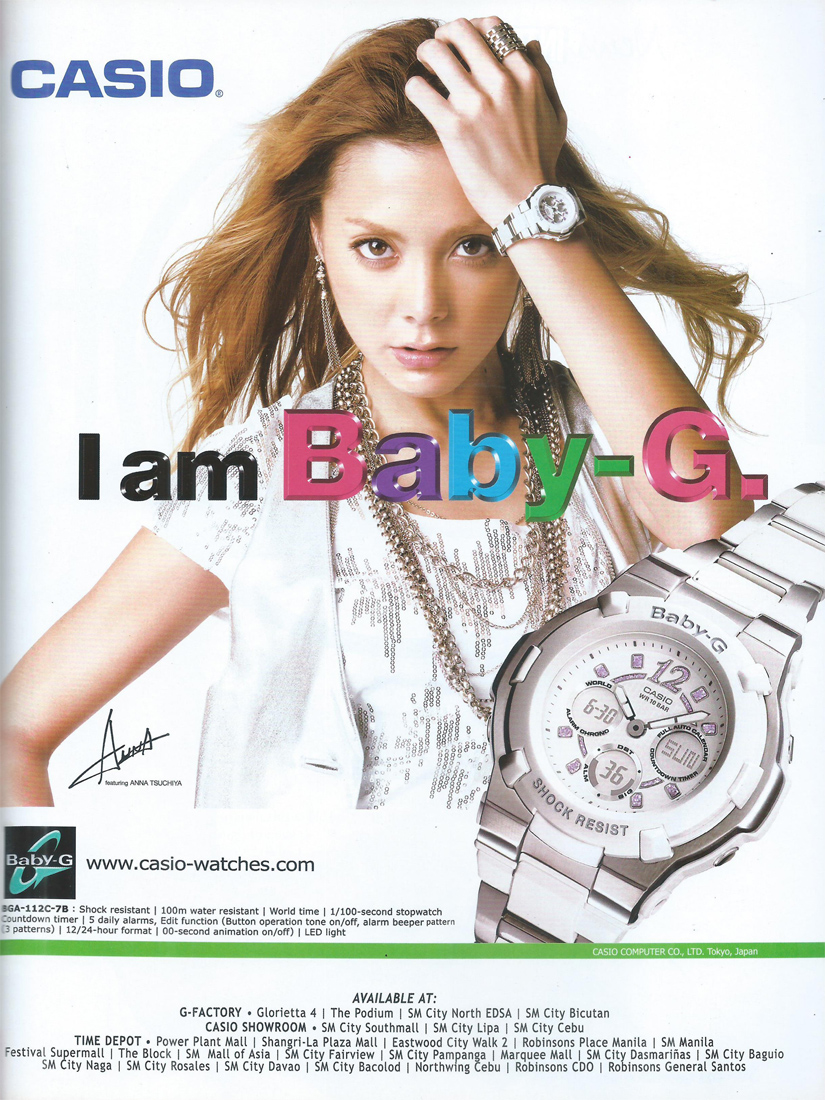
        Is there a connection between chic, expensive watches and beautiful, gorgeous women? I think the answer to that is “absolutely!”

        Just take a look at the print ads of the different brands of watches below and decipher the enigma in your mind. 

Timex with Filipino actress and Darna portrayer Angel Locsin

Philip Stein with Filipino singer-actress Lea Salonga

 
Baume & Mercier with American actress Meg Ryan

Casio with Japanese singer-actress Anna Tsuchiya

Chanel Le Temps with model-actress Claudia Schiffer


Citizen with American singer-songwriter Kelly Clarkson


Dior with actress South African Charlize Theron

Ebel with Brazil-born German model Gisele Bundchen

Fossil with American actress Kristen Bell


Hublot with Israeli actress Bar Refaeli

Jaeger Le Coultre with German actress Diane Kruger

Longines with Miss World 1994 Aishwarya Rai

Movado with Ukrainian ballet dancer Irina Dvorovenko

Omega with American actress-model Cindy Crawford

Patek Philippe with Hungarian model Reka Ebergenyi

Piaget with Dutch actress-model Doutzen Kroes

Rado with Taiwanese actress-singer and writer Rene Liu

Rolex with Serbian Tennister Ana Ivanovic

Sony Smartwatch with Hungarian model Gabriella Papp

Tag Heuer with Russian Tennister Maria Sharapova

Tissot with American race car driver Danica Patrick

Tommy Hilfiger with Namibian model Behati Prinsloo

Cartier with a jaguar for a femme fatale


          Whew! Horology, horologist, horologiast! If only these were a real collection of awesome watches instead of mere print ads. That would be something. I hope Robert Downey Jr would read this and give me one among his collection, just for the kick of it, and well because he’s my favorite Hollywood actor and Iron Man is my favorite superhero.